
Learning Academy · Grade-Level Learning
The 1st grade learning guide
First grade is the year reading is supposed to happen — plus place value, addition strategies, and real sentences. It's also the single most important year not to wait on a worry.
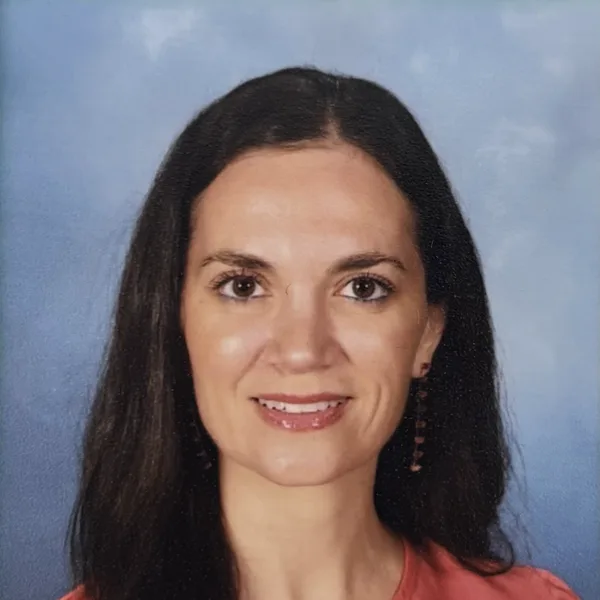
Written by Andreea Schwimmer, M.A. — credentialed elementary educator, 13+ years in elementary education · Reviewed by South Bay Peak Learning
Last updated July 11, 2026 · 8-minute read · This guide is written to support families and complements — never replaces — communication with your child's classroom teacher.
In this guide you'll learn
- Reading's assembly year: decoding, the patterns, and the guessing trap
- First grade math: strategies past counting, and place value's debut
- Writing's leap: from labels to related sentences
- Why 'wait and see' costs more in 1st grade than any other year
First grade carries the biggest expectation in elementary school, mostly unspoken: this is the year reading happens. The kindergarten pieces — sounds, letters, blending — are assembled into actual reading, while math climbs past counting into strategies and place value, and writing leaps from labels to sentences. It's a wonderful year. It is also the year where "wait and see" carries its highest price — so this guide is half map, half alarm clock.
The year's map
| Strand | Typical by spring | Watch for |
|---|---|---|
| Reading | Decodes one-syllable words confidently; owns sh/ch/th, blends, silent-e; reads simple books with growing smoothness; retells the story | Guessing from pictures/first letters; memorizing books; distress at reading practice |
| Math | Adds/subtracts within 20 with STRATEGIES (making ten, doubles, counting on); place value in two-digit numbers; solves simple word problems with drawings | Everything still counted from one in spring; 'seventy-three' written as 703 |
| Writing | Several related sentences on a topic; capitals and end marks appearing; invented spelling maturing toward patterns | Letter formation so laborious that ideas can't get out; sentences stuck at 2–3 words all year |
| Learner skills | Works 10–15 minute stretches; manages materials with a system; runs a simple routine | Every transition and task requiring full adult narration by spring |
Reading: the assembly, and the trap
On-track first-grade reading is slow and sounding-out before it's smooth — the labor is the learning. The trap to watch is the shortcut: guessing from pictures, first letters, or context. Guessing looks fluent in 1st grade (the books are guessable) and collapses in 2nd–3rd when they aren't; a spring 1st grader whose main move is the guess needs redirecting to the letters now, gently and firmly ("check it with your finger"). Home's jobs: daily just-right practice where success runs ~19 of 20 words, patience with the sounding, and the read-aloud channel kept rich and separate. The phonics guide covers the machinery; the milestones map shows the road ahead.
Math: strategies past counting
First grade math's real project is the climb from counting to strategy — the making-ten and doubles moves that turn 8 + 5 from a finger marathon into "10 and 3." The second project is place value's debut: tens as bundled units, the truth inside two-digit numbers. Both are built concretely (ten-frames, bundles, drawings), and both respond to five-minute home games far better than to worksheets — the addition strategies guide has the ladder and the games rung by rung.
Suggested next reading
- The 2nd Grade Learning Guide — the fluency year ahead
- Supporting Early Phonics — this year's engine room
- Addition Strategies — the math ladder, rung by rung
Questions parents ask
How well should a 1st grader read by June?
Typically: decodes regular one-syllable words confidently, handles common patterns (sh, ch, silent-e), reads simple books aloud with growing smoothness, and retells what happened. Wide normal range — but effortful, guess-heavy reading in spring is a signal, not a phase.
My 1st grader guesses words from the pictures. Isn't that a strategy?
It's a habit worth redirecting now: picture-guessing feels like progress and collapses in 2nd grade when pictures leave. The replacement is 'check it with your finger — sound it through.' Slow sounding-out is the real road; fast guessing is a detour that ends.
Fingers for math in 1st grade — fine or a problem?
Fine as a bridge, watched as a destination. The year's arc is FROM counting TO strategies (making ten, doubles, counting on). A spring 1st grader still counting every problem from one is telling you the strategy rungs need building — very doable, better now.
What does place value look like in 1st grade?
The debut: that the 3 in 34 means three TENS. It shows up as bundling straws, tens-and-ones drawings, and jumps of ten (34, 44, 54). Wobbles are normal; writing 'seventy-three' as 703 in spring is worth gentle rebuilding with objects.
How much homework is right for 1st grade?
About ten minutes plus reading practice. If it's routinely taking half an hour of struggle, the homework is delivering a message about a skill — worth decoding rather than enduring.
My child read fine in the fall and has plateaued. Normal?
Reading growth comes in surges and plateaus, so a flat month is nothing. A flat SEASON — especially while classmates accelerate — is worth a check; mid-year plateaus often mark a specific pattern (blends, silent-e) that didn't land.
Reversals and backwards letters are still everywhere. When does that matter?
Still normal territory in 1st grade. Frequent reversals persisting through 2nd grade, alongside reading struggle, are worth raising with the teacher as part of the whole picture — raised, not diagnosed at home.
If reading is going badly, should we wait for the school's process?
Talk to the teacher immediately AND act at home in parallel — the school's supports and timeline are real but rarely fast. First-grade reading gaps respond dramatically to prompt systematic help; this is the one year where my professional advice is simply: don't wait.
If you would like this kind of individual attention for your child, tutoring is available in-home throughout the South Bay or online.
Keep exploring
1st Grade Tutoring
The single most important year for learning to read.
Read morePhonics
Systematic, explicit phonics for new and struggling readers.
Read moreReading milestones, TK through 5th grade
What does on-track reading look like at each age — and which wobbles are normal versus worth acting on? A grade-by-grade map from years of elementary teaching experience.
Read more